

Currently Empty: $0.00
Durability is the first question most homeowners asked before buying engineered hardwood flooring. A busy household, active pets, or a high traffic hallway all put real stress on the floor. The good news is that the most durable engineered hardwood flooring isn’t hard to identify once you know what to look for. There are numerous wood species, such as, wear layer thickness, core construction, and finish quality, and all that plays a role. At A to Z exotic hardwoods, we have spent years sourcing rare and dependable species for homeowners that last long. Here’s what actually makes engineered hardwood durable and which options are worth your investment.
What makes engineered hardwood durable?
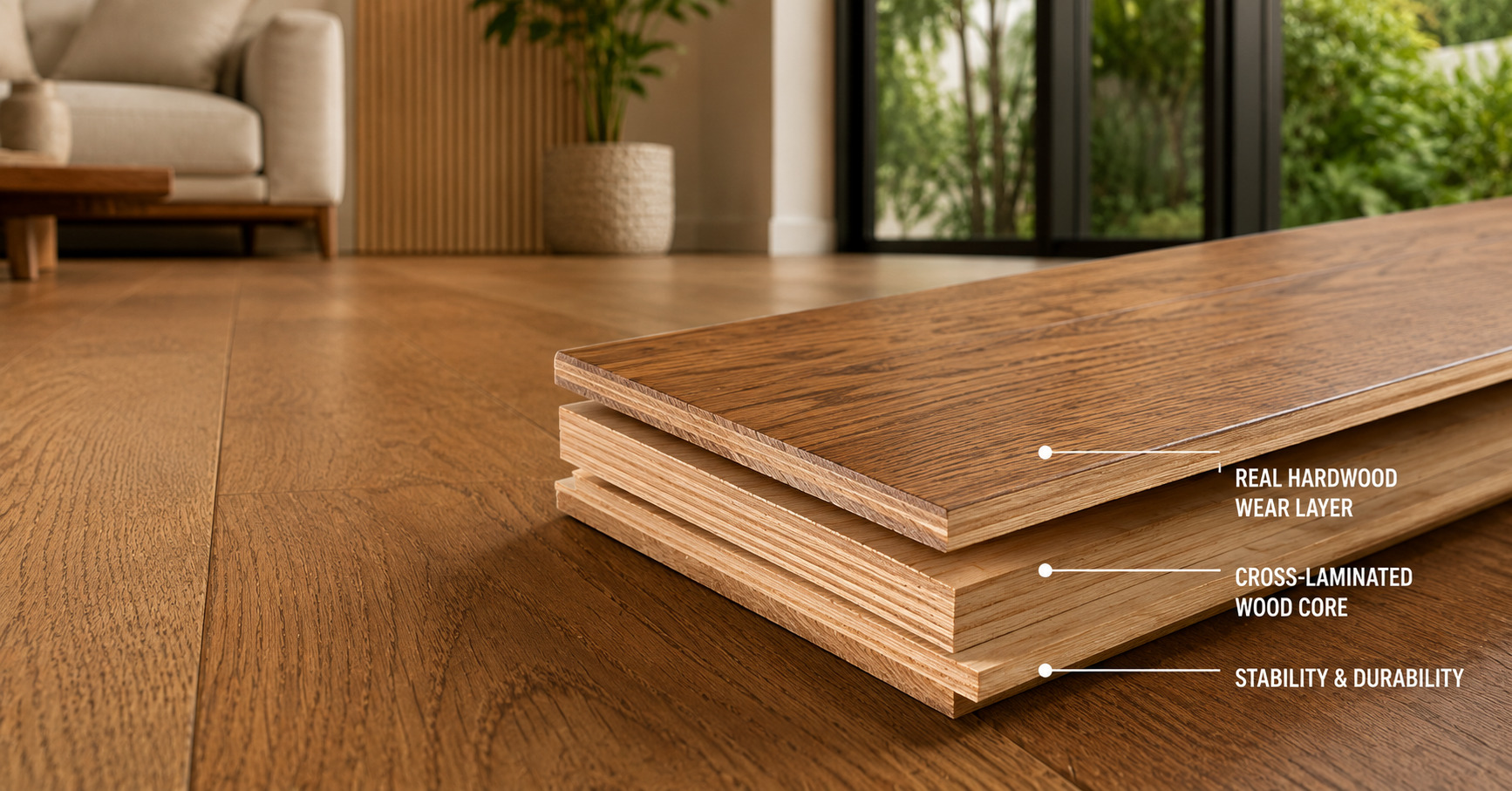
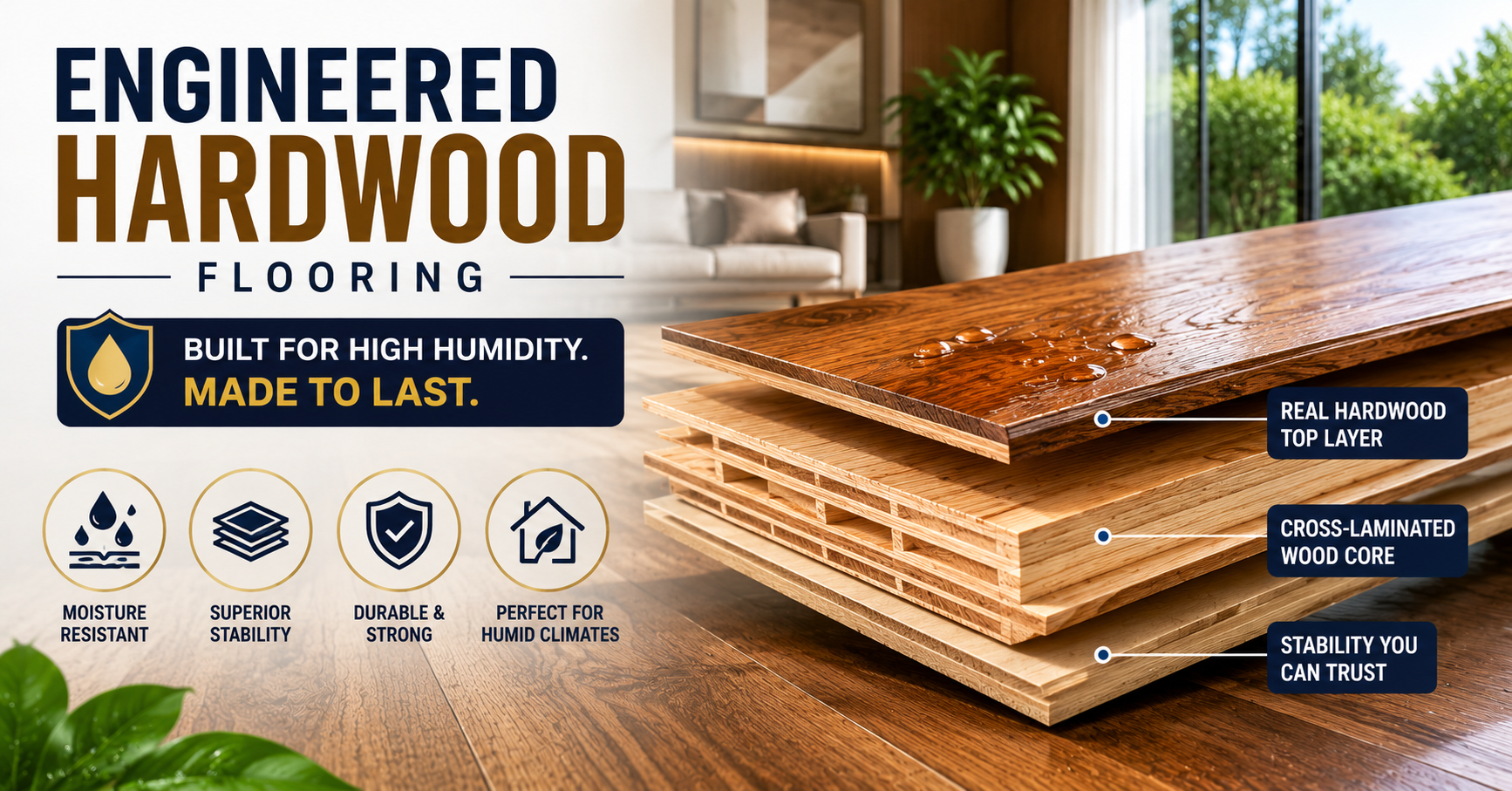
Engineered hardwood flooring is built from layers, not a solid single plank. A real wood veneer sits on top of a plywood or high density fiberboard (HDF) core. This layered construction is what gives engineered hardwood its strength and stability.
There are several factors determine engineered hardwood flooring durability:
Wood species: Harder species resist dents, scratches, and daily wear.
Wear layer thickness: A thicker top layer means more sandings over the floor’s life.
Core material: Plywood cores tend to outperform HDF in stability and moisture resistance.
Finish type: A strong finish adds an extra shield against scuffs and spills.
Each of these elements work together. A hardwood species with a thin layer won’t outlast a moderately hard species with a thick one. That’s why durability in engineered hardwood is never about one factor alone.
Understanding the Janka hardness scale
The easiest way to compare wood species is the Janka hardness scale. This test measures the force needed to push a steel ball halfway into a sample wood. The result is the Janka rating, expressed in pond force (lbf).
A higher JAnka rating means a harder, more scratch resistant engineered hardwood. Here’s a simple breakdown:
Below 1000 lbf (Softer species)
1000 to 2000 lbf (Mid range hardwood)
2000 lbf and above(Exceptionally hard species)
Knowing where a species falls on this scale helps you match the wood to your lifestyle. A quiet guest room can handle a softer wood. A busy kitchen or entryway needs something tougher.
Softer species: elegant but best for light use
Some of the most beautiful wood species fall on the softer end on the Janka scale. Walnut and certain pine varieties offer rich color and warmth. They bring character to any room.
These woods are not the best fit for high traffic areas. Dents and scratches show up faster under heavy use. They work best in bedrooms, formal dining areas or spaces with light foot traffic. If you love the look of walnut but worry about the wear, ask about the protective finishes. A strong top coat can help offset the natural softness.
Mid-range hardwoods: everyday strength & style
Oak, maple and ash sit comfortably in the mid-range of the Janka scale. Most fall between 1200 and 1800 lbf. This makes them a popular choice for engineered hardwood for high traffic areas like living rooms , hallways and family spaces.
These species offer a practical middle ground. They handle moderate traffic well without sacrificing the classic hardwood look. White oak engineered hardwood has become a favorite for its versatility and resistance to moisture compared to red oak.
For most households, mid-range hardwoods deliver the right mix of performance and price. They are dependable,widely available, and easy to maintain overtime.
The most durable engineered hardwood species
When durability is top priority, exotic hardwood flooring species lead the pack. These woods often exceed 2000 lbf on the Janka scale, making them the best engineered hardwood flooring for durability in busy homes and commercial spaces.
Some of the toughest options include:
Brazilian walnut
Brazilian cherry
Hickory engineered hardwood
Kempas
Santos Mahognay
These spices cost more upfront, but they pay off in longevity. A floor built from one of these woods can handle decades of foot traffic, pets and daily life without losing its character.
Why wear layer thickness matter?
The wear layer is the top option of the plank made from real hardwood. Its the part that gets sanded and refinished over time. A thicker wear layer means more refinishing cycles before the floor needs replacement, which is why “can engineered hardwood be refinished?” is one of the common questions we hear.
Here is a quick guide:
Under 2mm: Limited refinishing, often only once or not at all.
2mm to 3mm: Allows for one to two light sandings.
3mm or more: Supports multiple sandings and significantly extends the floor’s lifespan.
When shopping for durable engineered hardwood, always check the wear layer specifications. A 3mm or thicker layer is the standard for long term performance.
Core construction: Plywood Vs HDF
The core sits beneath the wear layer and gives the plank its structural stability. Two materials dominate the market: plywood and HDF.
Plywood cores, especially those made from birch, generally outperform HDF. They offer better resistance to moisture and temperature changes. This matters most in wider planks, which are more prone to wrapping under stress.
HDF Cores can still perform well in moderate conditions. They tend to cost less and work fine in stable indoor environments. For home owners with fluctuating humidity, however, plywood remains the safer choice.
The role of finish in long term durability
A wood species can only do so much without the right finish, the finish acts as the floor’s first line of defence against scratches, spills and everyday grime.
Look for these finish types when buying for waterproof engineered hardwood flooring and long term protection:
UV-cured urethane: Hardens quickly under UV light, creating a tough, even protective layer.
Aluminium oxide coating: Adds extra scratch resistance, often used on high end residential and commercial floors.
Moisture-cured urethane: Offers strong water resistance, useful in kitchens and entryways
.
A premium finish can extend the life of even a mid-range hardwood species. It’s an investment that pays off in reduced maintenance and fewer visible scuffs.
Why sourcing matter as much as the wood?
Durability isn’t only about species and specs. Where your woods come from affects quality too. Mass produced flooring often skips careful grading and selection. This can lead to inconsistent hardness and finish quality across the same product line.
At A to Z exotic hardwoods, every plank is hand-selected for quality and consistency. We work directly with trusted mills to source rare and dependable species, including hard to find options like Kempas and Royal Mahogany. This hands on approach means you get engineered hardwood flooring that performs as well as it looks.
Final Thoughts
The most durable engineered hardwood flooring combines four things, those are, a hardwood species, a thick wear layer, a stable core, and a quality finish.Species like braziline walnut, braziline cherry, hickory and kempas sit best on the engineered hardwood durability scale. Mid-range hardwoods like oak and maple remain reliable choices for most of the homes.
Your best option ultimately depends on your household, your traffic patterns and your style preferences. A knowledgeable supplier can help you weigh these factors and find a floor built to last.
Ready to find the most durable engineered hardwood flooring for your home? Contact A to Z Exotic hardwoods today, and let our team help you choose flooring that’s beautiful, dependable and built for real life.
