

Currently Empty: $0.00
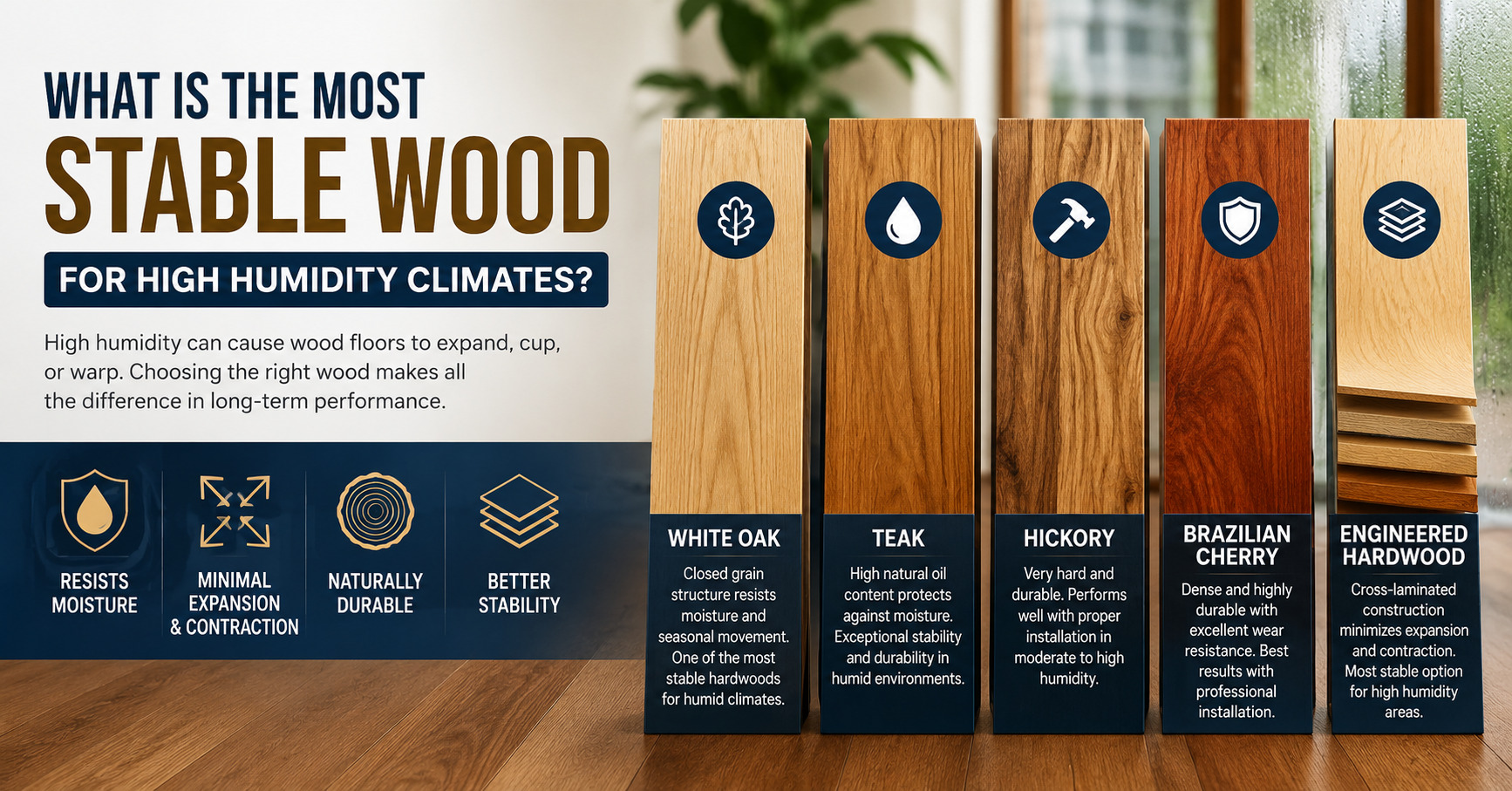
High humidity can be challenging for any wood product. Moisture in the air causes wood floors to expand when humidity rises and shrink, when condition becomes dry. Over time these natural movements can lead to a gap , cupping or warping if you choose the wrong flooring material. Choosing the most stable wood for high humidity climates protects your investment and keeps floors looking flawless for years. At A to Z exotic hardwoods, we help homeowners in humid regions choose species that are specifically built to handle moisture without losing their shape.
Why does humidity affect wood floors?
Wood is a natural porous material. It absorbs and releases moisture depending on the surrounding air. This is called wood movement, and small amounts are normal.
The problem starts when humidity swings are extreme or constant. Excess moisture can cause:
- Cupping: plank edges rise higher than the center.
- Crowning: the center of the plank rises above the edge.
- Gapping: boards shrink and pull apart during dry months.
- Warping: planks twist or bow out of shape entirely.
Choosing the right species and construction can reduce these risks.
What makes a wood dimensionally stable?
Dimensional stability refers to how much a wood species expands or contracts with moisture changes. Some woods barely move at all. Others shift with every season. Stability depends on a few factors:
- Wood density: denser woods often resist moisture absorption better.
- Grain pattern: quarter sawn and rift sawn cuts move less than plain sawn boards.
- Natural oil content: oily woods naturally repel moisture.
- Construction type: engineered flooring is generally more stable than solid woods.
Best hardwood flooring for high humidity climates
Several hardwood species have earned a strong reputation for performing well in humid environments. These options combine durability, stability and lasting beauty.
● White oak hardwood flooring
White oak is one of the most recommended hardwood flooring choices for humid climates. Its closed grain structure naturally slows moisture absorption, making it more resistant to seasonal movement than many other hardwood species. It also offers excellent durability, making it suitable for both busy households and long term flooring projects.
● Teak hardwood flooring
Teak is well known for its exceptional resistance to moisture. Natural oils within the wood help protect it from humidity while reducing expansion and contraction. Although teak flooring is more expensive than many other hardwood options, it delivers outstanding long term performance in humid climates.
Its rich color and distinctive grain also make teak a popular choice for homeowners seeking both beauty and durability.
● Hickory hardwood flooring
Hickory is valued for its incredible hardness and durability. While it does experience some seasonal movement, proper installation allows it to perform well in homes with moderate to high humidity. Hickory flooring also resists dents and everyday wear, making it an excellent option for active families.
Its natural variation in color creates a warm and inviting appearance that adds character to almost any room.
● Brazilian cherry hardwood flooring
It is another durable hardwood flooring option for a humid environment. Its dense structure provides excellent wear resistance while offering a rich, elegant appearance. When properly acclimated and installed, brazilian cherry performs reliably despite seasonal humidity changes.
Because of its density, professional installation is highly recommended to achieve the best long term results.
Is engineered hardwood more suitable?
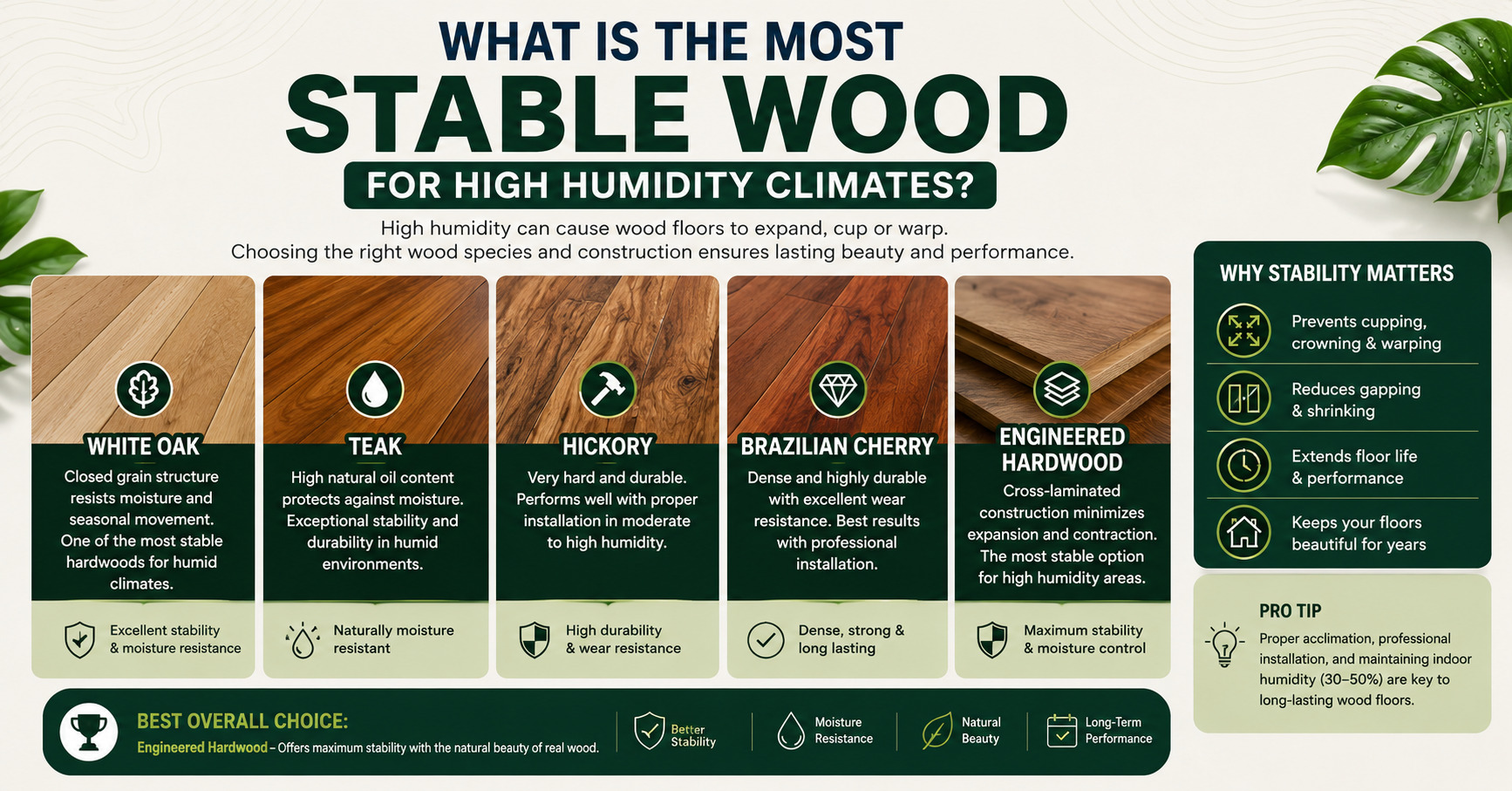
This flooring type features a solid wood wear layer on its surface, paired with a multi-layer cross-laminated core where the grain direction of each inner layer alternates. Engineered hardwood design drastically reduces expansion and contraction, making the floor resistant to warping and deformation. It has been recommended by flooring industry professionals for use in high-humidity regions such as coastal areas.
No matter what type of hardwood flooring you choose, correct, compliant installation is the
core prerequisite to avoid humidity-related problems. Before installation, always allow the wood to acclimate in the indoor space where it will be installed, so it can adapt to local temperature and humidity levels to balance its moisture content.
Which hardwood flooring is the most suitable?
White oak remains one of the most stable solid hardwood flooring choices for humid climates. It offers a great balance of strength, moisture resistance, and timeless style. Teak provides outstanding moisture protection but comes at a premium price. Hickory and Brazilian cherries also perform well when properly installed and maintained.
However, if maximum stability is your priority, engineered hardwood flooring is often the best option. Its layered construction greatly reduces movements caused by humidity while maintaining the authentic appearance of natural hardwood.
Choose the right wood for a humid climate
Selecting the right wood for a humid climate is an investment in your home’s long term beauty and performance. Stable wood species can reduce common moisture related problems such as cupping, gapping, warping and shrinking. While oak, teak, hickory and brazilian cherry all offer dependable results. On the other hand engineered hardwood flooring provides even greater stability for areas with consistently high humidity.
By choosing quality hardwoods for your floors, ensure the professional installation, and maintain the proper indoor humidity so that you can enjoy beautiful wood floors that remain strong, stable and attractive for many years. A thoughtful choice today helps you prevent the costly repairs for tomorrow while preserving the natural elegance that will make your floors a timeless favorite.
